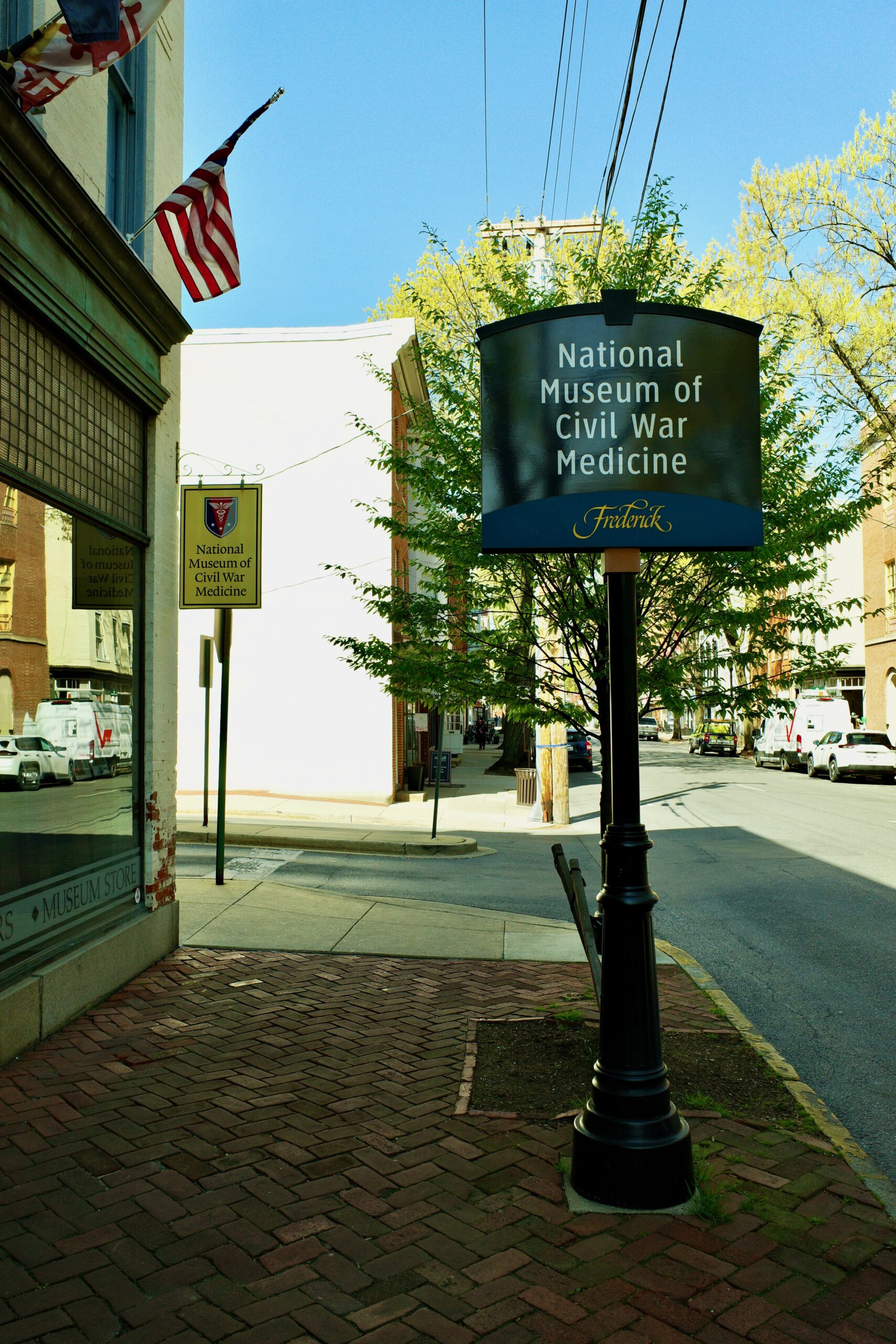
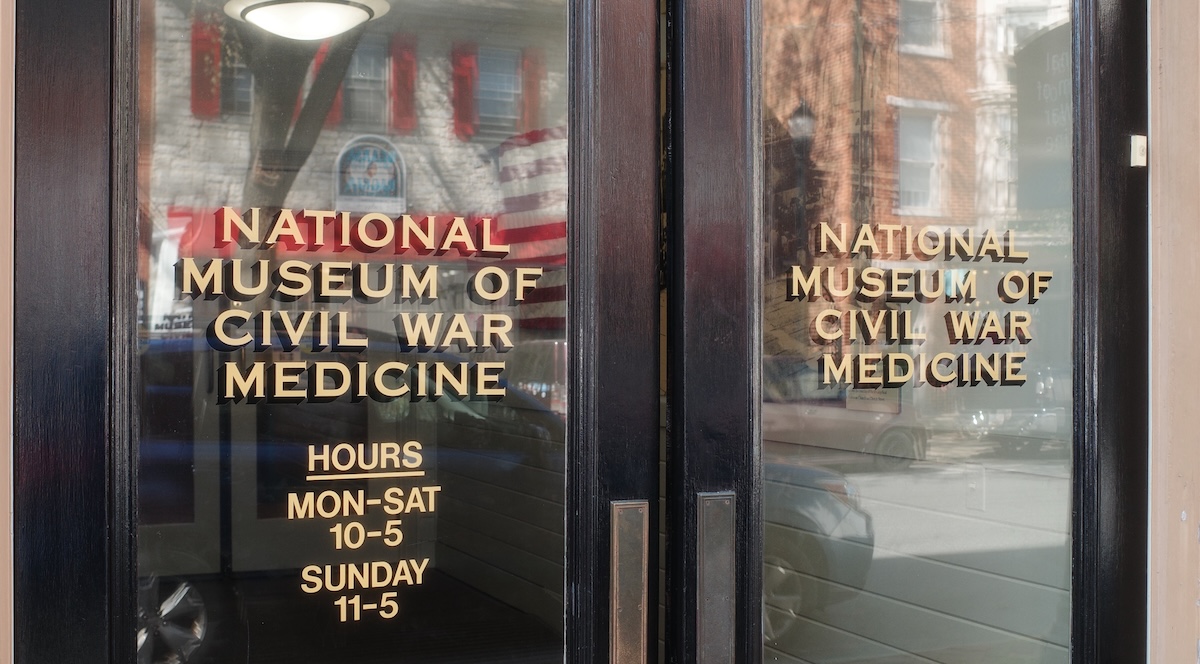
After an eight-day cruise from Baltimore to the Bahamas, with enough bad weather that we never even made it to Nassau, and a six-hour road trip still ahead of us to get home, it’s doubtful anyone in the family wanted to make a stop in Frederick, Maryland to see a museum.
But I was undeterred, and off to the National Museum of Civil War Medicine we went.
I wasn’t about to lose my second chance to see it. A few years prior, we were on another family road trip out this way. On the way home, I stopped at an exit to get gas, not knowing it was the same exit for the museum. I thought about powering through then as well; after all, I had been an avid follower of the museum on Facebook for a while and had recently been enjoying Jonathan W. White’s Midnight in America: Darkness, Sleep, and Dreams During the Civil War, also recommended by the museum.
It was the perfect time to satiate my desire to learn more about the marvels of mid-19th century medical progress in the wake of devastating war, but the kids were smaller and far less agreeable. So we trekked home, and the museum would have to wait until another day.
A day that has finally come.
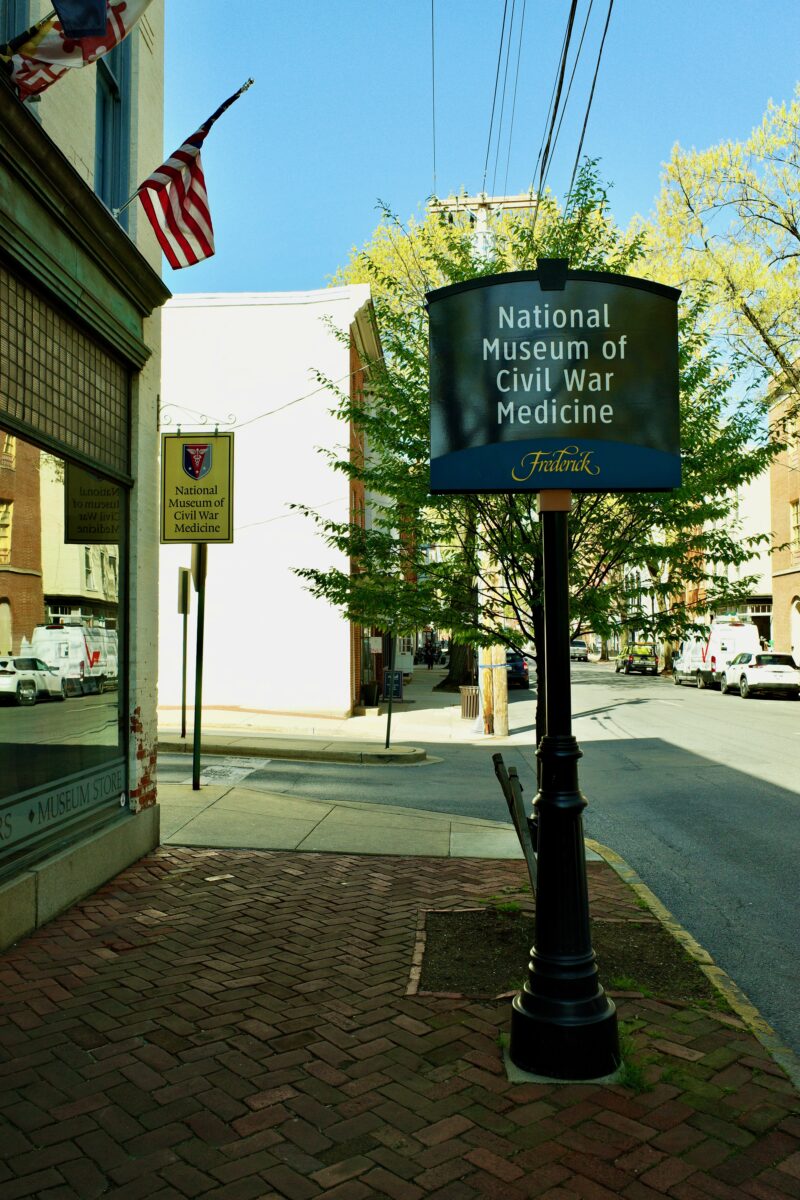
Located right in the heart of Frederick, the museum is part of a collection of beautiful, tree-lined streets and blocks of unique businesses of all types. While we only had a short window this day, we’ll no doubt be back to spend more time in this area and, naturally, check out a Frederick Keys game at Nymeo Field, perhaps on our next cruise road trip (that doesn’t sail out of Baltimore in early April).
As for the National Museum of Civil War Medicine, it’s a deeply informative and engaging stroll through the state of medical care prior to the Civil War and how the conflict, by necessity, brought about numerous advancements in the state of emergency medicine, with those effects still felt to this day.
The museum works hard to dispel a number of Civil War medicine myths that have been perpetuated over the years. Contrary to popular belief that soldiers would “bite the bullet” in lieu of anesthesia, chloroform and ether were used extensively throughout the war. Additionally, surgeons were not heartless butchers, hacking off limbs for the fun of it. On the battlefield, with bullets like the Minié ball obliterating bones into a million pieces, amputation was often the only way to save a soldier’s life.
Perhaps most compelling during my speed tour of the museum was learning that, of the more than 600,000 fatalities during the Civil War, the biggest killer of soldiers was diarrhea and dysentery, also known as “the Virginia Quickstep” and “the Tennessee Trots.” When you imagine the putrid, unsanitary conditions of the camps in which soldiers lived – waiting day in and day out, fighting just as hard to fend off boredom – disease became a unit’s worst enemy.
As I made my way back to the car after buying a souvenir mug, I made sure to tell my kids – seven and five years old, respectively – that diarrhea fact. They appreciated it.